
Mistral’s bet
on control.

From a torrent link to a European AI stack.
Three researchers. A different way to release AI.And a much bigger question about who gets to own it.Follow the story

The first public release looked less like a technology launch than an address pasted into a message. On 27 September 2023, Mistral posted a torrent download link for its first model. Three years later, the French company was announcing multibillion-euro funding and describing a future built around models, products and computing infrastructure. Between those two moments lies a question bigger than any single benchmark: who gets to control the AI they use?
Reported through 7 October 2026. Original announcements, founder posts and partner accounts inform this history. Company claims and future plans are identified in the text. Explore the sources ↓
Three researchers, one wager
Before the torrent link, there was a team leaving the places where the first wave of modern language models had been built. Arthur Mensch came from DeepMind; Guillaume Lample and Timothée Lacroix came from Meta. They were starting a company in a field where the biggest technology businesses already had a head start.
In its account of the seed investment, Lightspeed described founders who had met as students at École Polytechnique and École Normale Supérieure. Mensch had contributed to DeepMind’s Chinchilla work; Lample and Lacroix had worked on Meta’s LLaMA. Their experience connected two approaches to the same problem: making powerful models, and getting more from the computing resources available.
Mistral dates its founding to April 2023. Mensch became CEO, Lample led the science and Lacroix the technology. The first employee joined on 5 June; a seed round of over €105 million was announced eight days later. The company’s reputation was attracting serious money before its first public model had arrived.
That early backing was a wager on people as much as a product. It also put a question at the centre of the company’s story: could an independent team in France compete in a business increasingly shaped by the resources of American technology giants?
Mensch would later make the ambition unusually explicit. In a November 2023 post about the proposed EU AI Act, he argued against rules he believed would favour established companies. His point was about competing globally, rather than relying on a protected European market.
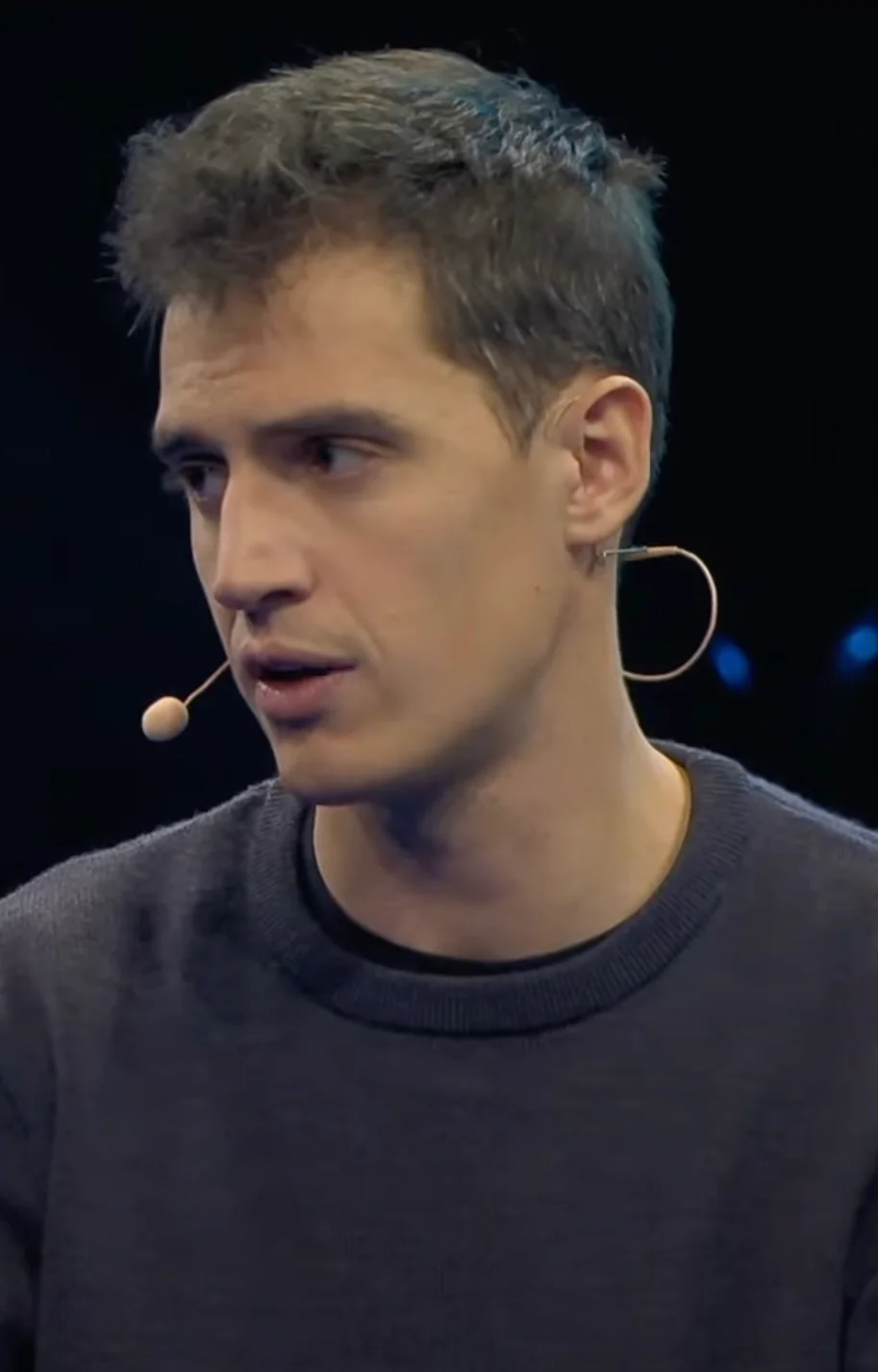
Arthur Mensch’s November 2023 argument for competing globally ↗“we play in the main league, we don’t need geographical protection”

A small model makes a big entrance
On 27 September 2023, Mistral’s original release post on X was a magnet link: an address people could use to download the model through a peer-to-peer network. There was no need to mistake a preview video for a product. The files were the product.
Mistral’s first public model arrived as a magnet download link. Original post, 27 September 2023.
View the original post on X ↗Original post and any attached media embedded from X; copyright remains with the respective rights holders.
The model was Mistral 7B. Its 7.3 billion parameters—the numerical settings learned during training—made it relatively small. In its own evaluations, Mistral reported strong results against larger Llama models. Those were company-run tests, but the practical proposition was easy to understand: useful capability in a model that was easier to deploy than a much larger rival.
The accompanying release made the distribution choice clear. The weights, or learned settings, were available to download under Apache 2.0. Developers could adapt and run the model on their own hardware or through a cloud provider. A hosted assistant gave access to answers; downloadable weights gave access to the machinery that produced them.
December’s Mixtral 8x7B pushed a different kind of efficiency. Rather than making every part of the model work on every fragment of text, it selected two of eight expert groups at each layer. “Experts” here are groups of model parameters, not eight little people with separate job titles. The selection let a larger collection of learned settings contribute without using all of them for every token—a small chunk of text.
Mixtral’s published architecture had 46.7 billion parameters in total, with 12.9 billion active for each token. That distinction matters: a model’s headline size is not the same thing as the amount of computation it uses at each step. Nor is either number a score for how intelligent it is.
A large model doesn’t use all of itself at once.
A token is a small chunk of text. At each layer, a router selects two of eight expert groups to process it.
The early releases established a recognisable combination: efficient models, downloadable weights and a permissive licence. Mistral could compete by giving developers something they could build with. The next challenge was finding a business around that freedom.
The download meets the checkout
By February 2024, Mistral was selling access as well as distributing models. Its first Mistral Large flagship arrived on the company’s developer platform and on Microsoft Azure. The same announcement introduced Le Chat in beta: an assistant people could use without first learning how to deploy a language model.
Microsoft’s partnership announcement described a multi-year agreement covering computing infrastructure, access to Azure customers and research collaboration. For a company trying to compete internationally, an established cloud platform offered a route to buyers and machines. For readers following the independence story, it also introduced a tension: a European alternative was growing with help from an American giant.
Independence, in other words, was not isolation. Mistral’s earlier releases had already acknowledged support from outside providers. The question was becoming how much choice its customers would retain, rather than whether every component and partner came from Europe.
The licensing story became more complicated too. When Large 2 arrived in July 2024, its weights came under a research licence for non-commercial use. Commercial self-deployment required a separate commercial licence. The model could be available to inspect and run without carrying the same permission to build a business that Apache 2.0 had offered.
That is why “open” needs a second sentence. Can you download the weights? Can you alter them? Can you sell a service built with them? These questions are related, but they are not interchangeable. Mistral now had both permissively licensed releases and commercial flagships. The label on the company did not answer the licensing question for every model.
What did “open” mean for these releases?
| Release | Weights | Permission at launch |
|---|---|---|
| Mistral 7BSeptember 2023 | Downloadable | Apache 2.0, including commercial use under its terms |
| Mixtral 8×7BDecember 2023 | Downloadable | Apache 2.0, including commercial use under its terms |
| Mistral Large 2July 2024 | Downloadable | Research licence; commercial self-deployment required a commercial licence |
This was the shape of a hybrid business: let some models circulate widely, charge for hosted access and specialist services, and meet organisations where they already bought software. It widened the audience, while making the original promise less simple to describe.
From a model to something people use
In February 2025, Le Chat reached iOS and Android with paid Pro and Team plans; an enterprise version was in private preview. The mobile launch put Mistral in a much more familiar setting: an app on a phone, rather than a model file in a developer’s directory.
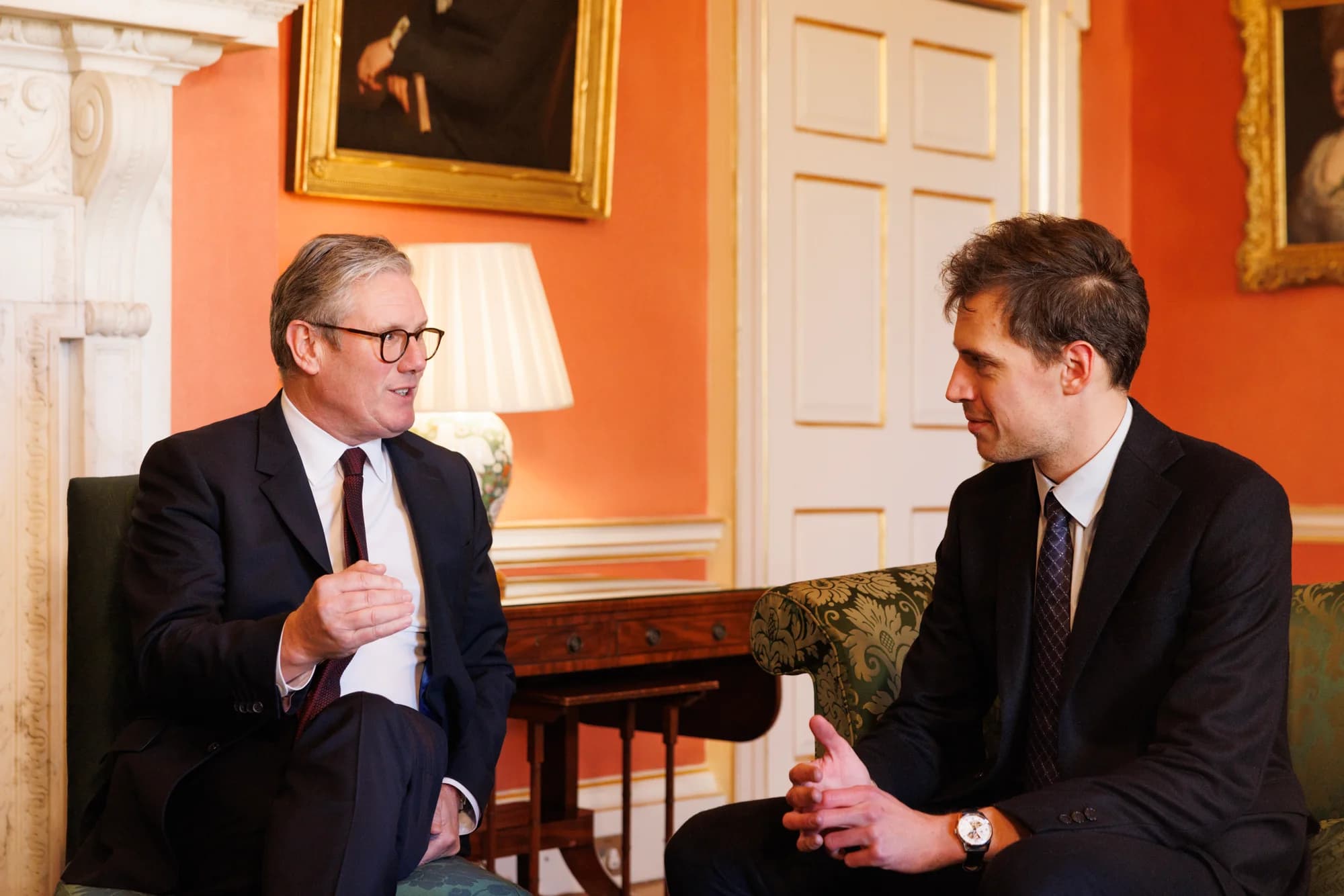
A month later, Mistral OCR targeted another everyday problem: turning PDFs and document images into structured content, including text and images. It was a move into a specific task with an identifiable user need. The original OCR release has since been superseded, but its place in the story remains clear. Mistral was expanding what it sold beyond general chat.
The growth also changed who had a stake in the company. On 9 September 2025, Mistral announced a €1.7 billion Series C. Its lead investor was ASML, the Dutch manufacturer of equipment used to make semiconductors. ASML’s own announcement put its investment at €1.3 billion, for approximately 11% of Mistral on a fully diluted basis.
The partnership went beyond a financial bet. ASML described collaboration on its products, research and operations. It was the sort of relationship in which AI had to understand specialised engineering problems, rather than simply produce a fluent answer in a chat window. That was an ambition for the collaboration, not evidence that every promised improvement had been achieved.
By March 2026, Forge made the enterprise direction more explicit. Mistral introduced a system for organisations to train models using their own internal data and knowledge. Instead of only asking an outside model about a company, the pitch was to shape a model around what that company knew.
The amounts raised tell one part of that widening ambition. They do not tell us whether the products are profitable or whether customers are getting the promised results. Investment is fuel, not a review score.
From millions to billions
Selected announced financing rounds · € million, nominal values
- SeedJun 2023>105Reported as over €105m
- Series ADec 2023385€385m
- Series BJun 2024600€600m · equity and debt
- Series CSep 20251,700€1.7bn · ASML led
- Series DSep 20263,000€3bn · Samsung led
The ground beneath the model
The next step was more physical. In June 2025, Mistral announced Mistral Compute: an infrastructure offering intended to combine graphics processors, the software that manages them and the services running on top. Its argument was that control over AI also required a choice about the machines beneath it.
This brings the story back to Europe’s geography. Paris represents the company’s starting point. Veldhoven represents a relationship with an industrial partner. Borlänge represents an announced expansion into Swedish computing infrastructure. They are different kinds of place in Mistral’s story; the map is not a list of three operating data centres.
Three places. Three different roles.
Scroll through the story, or select a city.
The company began in France. Its founders brought experience from DeepMind and Meta’s AI research teams.
Founded April 2023 ↗Start with the research.
The founding team’s expertise was the starting asset. Downloadable models gave developers a route to running and adapting the technology themselves. The company’s later infrastructure ambition would extend that idea below the model layer.
Read the original source ↗Bring industry into the picture.
ASML’s investment connected a French AI company with a Dutch semiconductor equipment maker. Its €1.3bn contribution was part of the €1.7bn Series C, not an additional round. The partnership brought specialised industrial problems into Mistral’s growth story.
Read the original source ↗Build for the next chapter.
The announced Swedish partnership expands the ambition beyond France. EcoDataCenter is to build and operate the facility. Its scheduled 2027 opening belongs to the future as of this article’s cutoff—not to the list of facilities already in use.
Read the original source ↗In February 2026, EcoDataCenter announced a €1.2 billion infrastructure partnership with Mistral in Sweden. The Borlänge facility was scheduled to open in 2027, with EcoDataCenter designing, building and operating it. That timetable makes it part of Mistral’s next chapter, rather than an already completed source of computing capacity.
In announcing the Swedish project, Mensch described independent European capabilities as the aim. The planned hardware came from NVIDIA. That combination is a useful reminder of what sovereignty can mean in practice: more control over deployment and operations, while still relying on a global supply chain.
“This investment is a concrete step toward building independent capabilities in Europe, dedicated to AI”
Arthur Mensch · Swedish partnership announcement, 11 February 2026 ↗
The existing French cluster provides a more immediate connection between funding and research. On 6 October 2026, Lample said Large 4 had been trained on 3,800 NVIDIA Grace Blackwell GPUs in Mistral’s cluster at Bruyères-le-Châtel, south of Paris. He linked that cluster to the Series B fundraise, and said additional clusters funded by later rounds were coming online soon. This is the founder’s account; we have not independently inspected the facility.
Lample says Mistral trained Large 4 on its French cluster and connects that infrastructure to the Series B financing. Further clusters are described as forthcoming. The attached image is part of his original post, not independently verified documentation of the facility.
View the original post on X ↗Original post and any attached media embedded from X; copyright remains with the respective rights holders.
The physical scale also brings costs that a download link cannot show. Mistral’s July 2025 environmental disclosure, based on work with Carbone 4 and support from ADEME, examined carbon emissions, water and resource use across a model’s lifecycle. Carbone 4’s account includes hardware manufacturing as well as training and use. Mistral acknowledged approximations and incomplete information about GPUs. Locating compute in Europe is one decision; measuring its full footprint is another.
A bigger bet. An unfinished answer.
By September 2026, the financing had reached another scale. Mistral announced a €3 billion Series D, led by Samsung Electronics, at a post-money valuation above €21 billion. The valuation is what investors were pricing the company at after the round. It is not money the company raised, revenue it earned or a measure of the quality of its models.
Mistral described its strategy as a full stack: open-weight models, computing infrastructure and products that bring the technology into use. Put simply, it wanted to sell more than an answer from a model. It wanted to supply the layers an organisation would need to make AI part of its own systems.
Large 4’s preview on 6 October 2026 brought the original question into the present. In his launch thread, Lample said the final model and its weights were planned before the end of the month. As of this story’s reporting cutoff, that was a promise still to be fulfilled. An API preview and a downloadable final release are different events.
The latest independent tests and early user comparisons show why the quality question remains worth asking separately. A European address, a large fundraise and an ambitious infrastructure plan do not settle whether a model handles a particular task well. That takes evaluation—and the answer can change from one task to another.
Looking back, the torrent link was a remarkably compact statement of intent. It gave people the means to run the model themselves. Three years later, that idea has expanded into a much more expensive proposition: applications, custom training and control over where the computation happens.
The history is neither a straight retreat from openness nor a finished tale of European independence. Different releases have carried different permissions; international partners have helped build the business; some infrastructure is operating according to the company, and some is still planned. Mistral’s bet is that customers will value the choices that emerge from that combination. The next chapter depends on what the company delivers, and what those customers can actually do with it.
The next chapter is being tested.
Our Large 4 analysis looks at independent evaluations, users’ actual tests and the preview’s unresolved details.
Read the latest analysis ↗Go back to the originals.
This history was assembled from public records, not interviews conducted by Marketer Fizz. Grok helped discover leads; claims and selected posts were checked against original sources. Research, writing and original illustration were assisted by AI and prepared under our editorial process. Fizzy is our fictional reporter persona.
View 28 reporting and visual sources
- Founding, founders and company milestones ↗Mistral
- Seed round and founders’ research background ↗Lightspeed · 2023-06-13
- Series A announcement ↗Lightspeed · 2023-12-11
- Series B announcement ↗General Catalyst · 2024-06-11
- Series B equity and debt composition ↗TechCrunch · 2024-06-11
- Mistral 7B launch and Apache licence ↗Mistral · 2023-09-27
- Original Mistral 7B magnet-link post ↗Mistral AI on X · 2023-09-27
- Mixtral architecture and release ↗Mistral · 2023-12-11
- Founder’s contemporary position on AI regulation ↗Arthur Mensch on X · 2023-11-16
- Commercial flagship and Le Chat beta ↗Mistral · 2024-02-26
- Microsoft–Mistral partnership ↗Microsoft · 2024-02-26
- Large 2 release and licensing distinction ↗Mistral · 2024-07-24
- Le Chat mobile and paid plans ↗Mistral · 2025-02-06
- Original document understanding API launch ↗Mistral · 2025-03-06
- Mistral Compute announcement ↗Mistral · 2025-06-11
- Series C round ↗Mistral · 2025-09-09
- ASML investment and industrial collaboration ↗ASML · 2025-09-09
- Swedish infrastructure partnership and planned opening ↗EcoDataCenter · 2026-02-11
- Series D round and full-stack strategy ↗Mistral · 2026-09-08
- Environmental lifecycle assessment disclosure ↗Mistral · 2025-07-22
- Assessment methodology and scope ↗Carbone 4 · 2025-07
- Enterprise model training system ↗Mistral · 2026-03-17
- Large 4 preview and planned weights ↗Guillaume Lample on X · 2026-10-06
- Founder’s account of the French training cluster ↗Guillaume Lample on X · 2026-10-06
- Large 4 preview announcement ↗Mistral · 2026-10-06
- Arthur Mensch video still and CC BY 4.0 attribution ↗Wikimedia Commons / Slush
- Arthur Mensch meets Keir Starmer: original photograph ↗Number 10 / Simon Dawson · 2025-01-09
- Map geometry reuse terms ↗Natural Earth
Maps use Natural Earth’s public-domain country geometry. Photographs retain their source and licence beside each image. Quotations link to their original context. Reporting cutoff: 7 October 2026; planned openings and model releases have not been treated as completed events.
About our reporting ↗